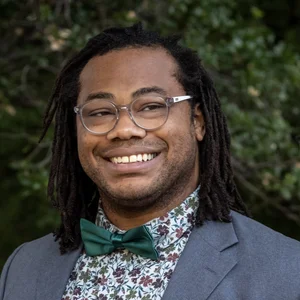
My Answers to Our Revolution East Bay: What District 7 Deserves
Our Revolution East Bay published my candidate questionnaire for Berkeley City Council District 7. My answers set out the standard I will bring to the Council: protect tenants before displacement, protect public land before it is lost, respect civil liberties, fund the work, identify who is responsible, and publish results.2
I am a Southside renter, SEIU-UHW member, medical case manager, former Berkeley Homeless Commission Vice Chair, Vice-Chair of the People's Park Council, and longtime People's Park organizer. I have worked inside public systems and alongside people living with their consequences. That experience shapes every answer I gave.
"How I treat constituents will be my standard."
That sentence is the center of my questionnaire and my campaign. I am asking voters to judge me by whether I listen before acting, identify who has authority, follow through, and report what changed.
Our Revolution East Bay also published Commissioner Micael's questionnaire. We share several progressive positions. The differences appear in our priorities, level of detail, public records, and willingness to say what should happen when residents challenge an institutional plan. Readers can review the candidate application page, my full questionnaire, and Commissioner Micael's full questionnaire directly.
Our Revolution East Bay presents these documents as candidate applications. Its page does not currently announce a District 7 endorsement. I have tried to represent Commissioner Micael's answers accurately and in context. I welcome a substantive response, will correct any factual error, and will link readers to his full reply.
What I Will Deliver for District 7
My questionnaire contains specific commitments that voters can use to hold me accountable.
| Issue | My Commitment |
|---|---|
| Clean government | Accept contributions only from individual people, use Berkeley public financing, and reject PAC, developer, professional-landlord, police-union PAC, and AIPAC political-committee money. |
| Housing stability | Protect eviction defense, emergency rent assistance, the Housing Trust Fund, Small Sites, and affordable-housing acquisition in my first City budget. |
| People's Park | Oppose building on People's Park, protect public land, and pursue a Southside Green Commons with measurable acreage, tree, restroom, recreation, and access goals. |
| Public safety | Make force a lawful, necessary, and proportional last resort while expanding clinicians, trained civilian responders, de-escalation, independent review, and public outcome reporting. |
| Surveillance | Oppose FLOCK and networked mass surveillance and protect sanctuary, due process, privacy, and City data. |
| Transportation | Support free and reliable transit, repair Telegraph now, keep Telegraph multimodal, and advance a pedestrian-priority Bowditch Commons through public process.2 |
| Accountable government | Name the responsible office, identify the legal authority, budget the work, publish results, and explain decisions to affected constituents. |
These are governing commitments. They identify actions I would take, the tools available to the City, and the results the public should expect to see.
Where Our Answers Agree
Commissioner Micael and I share many stated positions. I acknowledge those agreements because voters deserve an accurate comparison. This table summarizes our yes-or-no selections and explicit written positions in the published questionnaires.2
| Our Revolution East Bay Question | Aidan Hill | Commissioner Micael |
|---|---|---|
| Pledge to take no Super PAC money? | Yes | Yes |
| Accept AIPAC contributions? | No | No |
| Accept police-union contributions? | No | No |
| Accept landlord or real-estate-developer contributions? | No | No |
| Support single-payer health care? | Yes | Yes |
| Support public banking? | Yes | Yes |
| Support free public transit? | Yes | Yes |
| Support FLOCK surveillance cameras in public areas? | No | No |
| Support repealing Costa-Hawkins and the Ellis Act? | Yes | Yes |
| Support the international BDS campaign? | Yes | Yes |
We also agree on free public college, student debt cancellation, universal pre-K and child care, voting rights, repeal of Citizens United, ending private prisons and capital punishment, and protecting due process.2
The agreement is real. The next comparison asks whether the same words carry the same commitments.
Where His Answers Echo My Platform
Several of Commissioner Micael's published campaign positions repeat priorities at the center of my campaign: preserve affordable housing, prevent eviction, support public and nonprofit housing, expand unarmed crisis response, support public banking, make transit free, and publish housing information.28
Shared goals can arise independently. These documents do not establish who borrowed language from whom. They do establish how much governing substance each candidate put behind the language.
Commissioner Micael's official issues page deserves fair treatment. It identifies a $20 million seismic need at Berkeley Student Cooperative housing, proposes a vacant-commercial-property fee, calls for Housing Trust Fund predevelopment loans, and promises a housing dashboard.8 Those are concrete proposals. Yet when his questionnaire enters policy territory I have developed in detail, it frequently repeats the destination and leaves out the route.
| Shared Priority | What My Answer Commits To | What Commissioner Micael's Answer Says | What His Answer Leaves Unresolved |
|---|---|---|---|
| Preserve affordable housing | Protect the Housing Trust Fund and Small Sites in my first budget; help land trusts and nonprofits acquire occupied buildings before speculative sale; publish homes preserved, rent-controlled homes lost, response times, and tenant restitution. | Use the "3 P's" of preservation, protection, and production; preserve co-ops and community land trusts; expand rent control, rental aid, eviction protections, and publicly funded housing. | First-year funding, responsible department, acquisition process, preservation target, and reporting schedule. |
| Build unarmed public-safety response | Apply a lawful, necessary, and proportional force standard; distinguish Berkeley Police from UC Police; prioritize crisis clinicians and civilian responders; require independent review and deidentified outcomes. | Demilitarize police and send unarmed responders whenever possible because force is rarely justified and frequently overused. | Eligible call types, operating agency, supervision, complaint process, review standard, and public outcome measures. |
| Support public banking and free transit | Support the November 2026 public-bank measure with legal, financial, governance, and audit safeguards; use Berkeley's regional role to pursue free transit without sacrificing reliability. | Express excitement for Berkeley's public-bank initiative and expansion of Clipper BayPass. | The City action, governance safeguards, source of transit funding, responsible agency, service standard, and implementation timeline. |
| Make government accountable to residents | Name the legal authority, responsible office, budget, deadline, public metric, and response owed to people affected by a decision. | Emphasize relationships and experience with partners inside and outside UC Berkeley. | The process that lets constituent testimony change a proposal, and the written accountability owed when it does not. |
| Protect People's Park and public land | Oppose building on People's Park and refer a Southside Green Commons plan with measurable land, tree, restroom, recreation, and access goals. | Do not address People's Park in the environmental answer; the public record shows an affirmative vote on the City's supportive-housing funding reservation for the site. | A current position on building at the Park and any binding protection for its land, trees, gardens, public access, and community services. |
This is what I mean when I say parts of my platform appear in his answers without their teeth.
The headings are familiar. The enforceable parts are frequently missing.
The missing parts include a budget, a responsible office, legal authority, a deadline, a public measure, and a consequence when the plan fails.
A questionnaire answer should survive contact with a City agenda. Voters should ask what ordinance, referral, budget action, or oversight rule would carry each promise, who would implement it, and what result should exist one year after the election. That is the standard I apply to my own answers.
Where My Record and Priorities Differ
People's Park Is the Clearest Difference
Our Revolution East Bay asked each candidate to identify the most critical environmental issue in the community.
| Aidan Hill's Direct Answer | Commissioner Micael's Direct Answer |
|---|---|
| "People's Park is District 7's defining environmental issue." | "We must do everything in our power to reduce carbon emissions from vehicles by making car-free alternatives more viable." |
Cleaner air, reliable transit, protected bike lanes, and lower emissions all matter. Commissioner Micael's environmental answers do not discuss People's Park, its trees and gardens, or District 7's loss of public green space.2
I name People's Park because I have helped care for it. I worked with co-founder Michael Delacour and other longtime stewards, served as a lead community gardener, planted and maintained trees, reduced fire risk with PG&E, protected the Food Forest and Community Garden, and supported the campaign that secured the Park's National Register listing.2
That work taught me that land stewardship is climate policy and public space is neighborhood infrastructure. Berkeley's own records state that the Park's closure left District 7 as the city's only Council district without a public park.5
The disagreement also appears in the public record. In November 2025, Commissioner Micael voted with the Housing Advisory Commission to recommend extending a $14,359,593 City funding reservation for supportive housing at 2556 Haste Street, the People's Park site.4 This was an advisory funding recommendation. It did not authorize UC Berkeley's dormitory project or construction.
The approved minutes record two public speakers before the vote. Commissioner Micael voted yes. My published questionnaire states that residents asked the commission to pause or move the funding and that no reconsideration or dedicated public hearing occurred before the matter reached the Council.2
My position is direct. I support deeply affordable and supportive housing on suitable developed sites. I oppose building on People's Park. Public land should remain public. In my first 100 days, I will refer a Southside Green Commons plan that maps parks, gardens, restored land, land-trust acquisitions, converted rights-of-way, accessible restrooms, recreation, food sharing, mutual aid, and services.2
Questions Commissioner Micael should answer:
- Do you support building any housing on People's Park?
- Would you vote today to extend the same $14,359,593 City funding reservation at 2556 Haste Street?
- If your position has changed since the Housing Advisory Commission vote, when did it change and why?
- What binding protection would you require for the Park's land, trees, gardens, public access, restrooms, and community services?
Public Process Must Affect the Decision
| Aidan Hill's Published Position | Commissioner Micael's Published Position |
|---|---|
| Constituents affected by a decision must receive respect, an explanation, and a meaningful chance to change the outcome. | The answer emphasizes using relationships and experience with partners inside and outside UC Berkeley. |
Commissioner Micael's closing answer emphasizes relationships inside and outside UC Berkeley. My closing answer emphasizes accountability to people living with City decisions.2
That is a governing disagreement. Consultation has little value when public opposition cannot change an agenda, funding recommendation, or project design. A Councilmember should explain who has authority, what can still be changed, and how constituent testimony affected the final action.
When residents warn that a vote will cost them housing, safety, services, or public space, their testimony deserves a response before the vote. Public process must be capable of changing the outcome.
Questions Commissioner Micael should answer:
- What did the two public speakers ask the Housing Advisory Commission to do before your vote?
- Which part of the recommendation changed because of their testimony?
- If nothing changed, what additional information would have caused you to pause, amend, or vote against the recommendation?
- Will you commit to publishing a written response when substantial constituent opposition does not change your vote?
My Commitments by Issue
Housing and Tenant Protection
| Aidan Hill's Published Position | Commissioner Micael's Published Position |
|---|---|
| Protect eviction defense, emergency rental assistance, Small Sites, acquisition funding, and public reporting through the first City budget. | Cap rent increases at 3 percent and expand rental assistance and eviction protections. |
Both candidates support public housing, rent control, vacancy control, repeal of Costa-Hawkins and the Ellis Act, and stronger eviction protections.2
I identify the City actions available now: protect the Housing Trust Fund and Small Sites Program, acquire existing buildings before speculative sale, establish permanent nonprofit or public ownership, enact a tenant opportunity-to-purchase process, fund eviction defense, and publish preservation and displacement results.2
A housing promise should identify the budget, implementing department, legal authority, timeline, and number of homes preserved or created. It should also protect public land by directing housing investment to suitable developed sites.
Questions Commissioner Micael should answer:
- What Berkeley law would create the proposed 3 percent rent cap, and what state-law limits apply?
- How much City funding would you commit to rental assistance, eviction defense, public housing, and property acquisition in your first budget?
- Which developed sites would you prioritize for public or nonprofit housing?
- How many homes would you commit to preserving before displacement during your first Council term?
Public Safety and Surveillance
| Aidan Hill's Direct Answer | Commissioner Micael's Direct Answer |
|---|---|
| Force must be a "lawful, necessary, and proportional last resort." | Police force is "rarely justified and nearly always overused." |
Both candidates oppose FLOCK cameras and support sending unarmed responders when weapons are unnecessary.2
My commitment goes further into implementation. District 7 is policed by Berkeley Police and UC Police, two departments with different authority and oversight. I call for crisis clinicians, trained civilian responders, de-escalation, independent review, and public outcome data. I also testified against Berkeley's networked surveillance proposals at Council and committee meetings.2
The City must define which response arrives, who supervises it, how residents file complaints, and what information the public receives afterward. A general commitment to community trust cannot replace operating standards.
Questions Commissioner Micael should answer:
- Which calls should receive an unarmed responder, and which City department should operate that response?
- What limits would you place on Berkeley Police use of force, surveillance, and data retention?
- What authority would you use when UC Police activity affects District 7 residents?
- What independent review and public reporting would you require after a serious use of force?
Climate and Transportation
| Aidan Hill's Published Position | Commissioner Micael's Published Position |
|---|---|
| Make public transit free and reliable while protecting access, street maintenance, public space, and neighborhood livability. | Expand protected bike lanes, dedicated bus lanes, and transit-oriented housing. |
Commissioner Micael prioritizes protected bike lanes, dedicated bus lanes, transit-oriented housing, urban forestry, and cleaner air. I support bus lanes, bike lanes, free and reliable transit, shade, and streets that make it easier to travel without a car.2
My transportation standard accounts for the whole neighborhood. Disability access, emergency access, deliveries, small businesses, street maintenance, and traffic redirected onto residential blocks belong in the plan from the beginning. Climate policy should produce measurable improvements in air quality, transit reliability, tree survival, pedestrian safety, and public space.
I support a multimodal Telegraph Avenue and a pedestrian-priority Bowditch Commons developed through public process. Telegraph should receive needed pavement and safety repairs without waiting for a permanent car-free project.
Questions Commissioner Micael should answer:
- Do you support making Telegraph Avenue permanently car-free? If so, between which streets and during which hours?
- How would your plan preserve disability access, emergency access, deliveries, and customer access for small businesses?
- Which residential streets would receive displaced traffic, and what measurements would trigger a redesign?
- Would you repair Telegraph now even if the permanent corridor project remains unfinished?
My Independence and His Endorsements
I disclose my endorsements and campaign finances in my questionnaire. I also state that I will decline any endorsement conditioned on preferential treatment or improper influence over City business.2 My independence means I can agree with an organization on one issue, disagree on another, and explain the difference publicly.
Commissioner Micael lists Councilmember Cecilia Lunaparra and Telegraph for People among his endorsers. He also lists tenant, labor, student, environmental, and political organizations.3 Telegraph for People describes its flagship priority as making Telegraph Avenue car-free for three blocks from Haste Street to Bancroft Way.6
An endorsement does not prove control or agreement on every issue. It does establish a public political relationship. Voters may reasonably ask where a candidate agrees with an endorser, where they differ, and whether any policy commitment accompanied the endorsement.
Questions Commissioner Micael should answer:
- Which positions held by Councilmember Lunaparra would you continue, and where would you govern differently?
- Do you share Telegraph for People's goal for a permanently car-free Telegraph Avenue?
- Did you make any commitment concerning Telegraph Avenue, People's Park, or UC Berkeley while seeking either endorsement? If none, will you say so directly?
- Will you publish any questionnaires, interviews, or written commitments used to secure your organizational endorsements?
- What District 7 decision would lead you to vote against the position of a prominent endorser?
The Standard I Will Bring to District 7
My questionnaire shows what I have done, what I believe, which City tools I would use, and how residents could measure my work. That is the kind of Councilmember I am asking voters to elect.
The comparison still matters. Our disagreements become clear when we examine public land, UC Berkeley, neighborhood opposition, and the mechanics of governing. The questions in this article are fair because every candidate asking for public authority should explain their record and commitments. Commissioner Micael should have an opportunity to answer them directly, and voters should be able to compare those answers with mine.
My standard is straightforward: protect tenants before displacement, protect public land before it is lost, identify the City tool, name the responsible office, fund the work, publish the results, and return to constituents when a plan fails.
Read my full questionnaire, compare both candidates' written explanations and public records, and hold me to every commitment I made. I invite Commissioner Micael to answer the questions above in writing. Southside deserves a Councilmember rooted here, accountable here, and prepared to explain what can change, who has authority, what an action will cost, and how the public can measure whether it worked.
Read Aidan Hill's full Our Revolution East Bay questionnaire
Read Aidan Hill's District 7 campaign platform
Paid for by Aidan Hill for Berkeley City Council 2026, FPPC ID# 1481885.
Sources
1 Our Revolution East Bay, 2026 Endorsements and candidate applications, accessed August 12, 2026.
2 Our Revolution East Bay, Aidan Hill 2026 candidate questionnaire, published candidate PDF, accessed August 12, 2026. The source URL spells the first name "Aiden."
3 Our Revolution East Bay, Syrak Micael 2026 candidate questionnaire, published candidate PDF, accessed August 12, 2026.
4 City of Berkeley Housing Advisory Commission, approved minutes for November 6, 2025, Item 8A, pages 2-3.
5 City of Berkeley, Resolution Approving Peaceful and Lawful Use of the Dwight Triangle as Public Open Space, July 23, 2024.
6 Telegraph for People, organization homepage and stated flagship priority, accessed August 12, 2026.
7 Aidan Hill for Berkeley City Council, Telegraph Needs Repair Now. Keep It Multimodal, Make Bowditch Car-Free, campaign position statement, July 3, 2026.
8 Syrak Micael for Berkeley City Council, Issues, official campaign platform, accessed August 12, 2026.