

Keep Southside Livable
Housing People Can Afford to Keep

I have lived in District 7 as a renter since 2016.
I came through UC Berkeley as a first-generation, transfer, and re-entry student. I lived in cooperative housing and worked at the university as both a student worker and a staff member. I know this district from more than a campaign map.
In medical case management, I work with people when housing, health, benefits, and care systems collide. On Berkeley's Homeless Commission, I helped turn public testimony into formal recommendations for long-term housing subsidies, emergency shelter, and stronger inclusionary housing policy. That experience taught me that housing instability rarely arrives as one isolated problem.
A rent increase, an eviction notice, a building sale, or an unsafe apartment can disrupt someone's care, job, education, transportation, and relationships at the same time. Berkeley needs more homes. It also needs a housing system that helps students, workers, disabled residents, families, seniors, homeowners, and long-term renters remain here. Housing is a public necessity. It should not be left to purchasing power alone.
-
Berkeley has programs for housing production, tenant protection, preservation, emergency assistance, and rental safety. These programs address different problems and have different eligibility rules, funding sources, and implementation requirements. Understanding their limits means examining both what they accomplish and which needs remain unresolved.
Housing Planning Does Not Guarantee Delivery
Berkeley’s 2023–2031 Housing Element plans for 8,934 homes, including 5,270 for very-low-, low-, and moderate-income households. It also includes preservation, rehabilitation, fair housing, and tenant protections.
The plan establishes housing capacity and policy responsibilities. Delivering homes requires financing, construction, and occupancy. Planning for affordability and delivering affordable homes are separate stages that both need evaluation.
A complete assessment must examine housing delivered at each income level, existing affordable homes preserved or lost, and progress on the plan’s individual programs. Overall production figures cannot answer all of those questions.
Emergency Assistance Cannot Resolve Every Affordability Problem
Berkeley’s Housing Retention Program provides grants of up to $10,000 to eligible renters facing eviction. Applicants must meet income and documentation requirements and demonstrate that they can afford ongoing rent once their arrears are paid. Assistance is not guaranteed.
The program can address a temporary financial setback. Its eligibility requirements leave a different problem unresolved: a household whose regular income remains insufficient to cover rent.
Clearing overdue rent does not resolve a continuing gap between income and housing costs. Evaluating the program therefore requires distinguishing temporary hardship from an ongoing need for rental subsidy or a less expensive home. Applications, denial reasons, processing times, and subsequent housing retention would show whom the program reaches and where additional assistance is needed.
Tenant Protections Depend on Access to Assistance
Measure BB requires covered eviction notices to direct tenants to Rent Board assistance. Landlords must also file specified eviction documents with the Board within three business days of serving tenants.
These requirements create an opportunity to identify displacement risks. But notice monitoring, housing counseling, legal representation, and financial assistance serve different functions. The Rent Board’s counselors cannot provide legal advice about eviction proceedings.
The implementation question is whether tenants can reach the appropriate assistance in time. The published rules establish protections; they do not, by themselves, establish how consistently referrals lead to assistance or housing retention.
Affordable-Housing Fees and On-Site Homes Have Different Tradeoffs
Berkeley’s affordable-housing requirements allow covered developments to provide below-market-rate homes, pay an in-lieu fee, combine those options, or use another authorized alternative.
On-site homes connect affordability to a particular development. Fee payments can support affordable housing elsewhere, but that housing has its own financing and construction schedule.
The relevant comparison is the housing ultimately delivered: its location, affordability, completion date, duration of protection, and subsidy requirements. Neither fee revenue nor an on-site percentage alone establishes which approach produces the better result in a particular case.
Preservation Funding Has Documented Limits
The City’s 2025 report records $11.5 million in rehabilitation requests against $5.8 million available. It also reports loans covering 72 deed-restricted homes, with affordability extended by 55 years. 2025 Annual Progress Report, PDF page 8
These figures show preservation benefits alongside demand exceeding that funding round’s resources. They do not establish that every unfunded request qualified or that the same balance remains available today.
Rental Safety Requires Enforcement Capacity
The Rental Housing Safety Program combines annual owner inspections with proactive City inspections and enforcement. The 2025 report describes staffing turnover and administrative shortages that required inspectors to perform administrative duties. 2025 Annual Progress Report, PDF page 9
That is a documented capacity constraint. Its effect on residents requires further evidence: inspection coverage, correction times, repeat violations, and conditions after cases close.
Evaluating the Whole System
Housing policy should be assessed through coverage, funding, delivery, and outcomes. Existing programs have documented benefits, specific boundaries, and unresolved implementation questions. A clear public assessment must acknowledge those achievements while identifying which households remain underserved and what evidence is needed to understand why.
-
People’s Park: a documented difference
On November 6, 2025, Micael joined a unanimous Housing Advisory Commission recommendation to extend funding reservations for several affordable-housing projects, including $14,359,593 for supportive housing at 2556 Haste Street, in People’s Park. The recommendation also requested a developer presentation and regular project updates. Approved minutes, item 6
I disagree with that direction. My housing platform explicitly opposes housing construction on People’s Park and supports building housing on appropriate alternative sites. That creates a documented difference between us over where housing should be built and what should happen to this land.
I also want to be precise about what Micael’s vote was. This was a recommendation concerning a funding reservation for supportive housing. It was not a City Council vote approving UC Berkeley’s undergraduate housing project, and I would not claim that this vote proves he supported every component of UC’s larger People’s Park development.
What it does establish is that, when the Housing Advisory Commission considered reserving City housing funds for the supportive-housing component at People’s Park, Micael voted yes. I would not have.
Affordable housing: where we agree and where I go further
Micael and I share some positions on affordable housing. His published Issues page proposes nonprofit predevelopment loans, repairs to cooperative housing, demolition controls, eviction protections, and a vacancy-related revenue source for affordable housing and rehabilitation. Micael’s published housing platform
I am not going to pretend those proposals do not exist simply because we are opponents. His platform does discuss displacement, tenant protections, affordable housing, and mechanisms for financing some of that work.
The difference I see is in how City government intervenes and what happens after a problem is identified.
My housing platform is built around specific intervention points.
When a tenant receives an eviction notice, I want that event to trigger an offer of housing-retention assistance.
When an occupied building at risk of displacement is offered for sale, I want the City to begin preservation outreach and determine whether acquisition by a nonprofit, cooperative, community land trust, or other public or community-controlled entity is possible.
When public money pays for rehabilitation, I want protections for existing tenants and reporting on whether people were able to remain or return.
When major public investment could produce displacement, I want that risk evaluated while the decision can still be changed, rather than documented after the fact.
And when the City establishes a deadline or responsibility and fails to meet it, I want residents to know what happened, which department is responsible, and what the next step is.
Those are not simply differences in rhetoric. They are differences in how I think housing policy should operate administratively.
Implementation: what my platform specifies
My housing platform specifies an eviction-to-assistance referral process, an occupied-building acquisition and preservation track, public and community-controlled ownership models, and actions I would initiate during my first 100 days in office.
Micael’s published Issues page does not specify those same procedures or a comparable first-100-day schedule. His platform does include a Housing Trust Fund financing mechanism and an office-managed dashboard.
That distinction matters to me.
A dashboard can tell the public what government is doing. I want to begin one step earlier by defining what should trigger government action, who becomes responsible, what the next action should be, and what outcome residents should eventually be able to measure.
That does not mean Micael has no implementation ideas beyond what is published on his website. I can only compare what each of us has actually put forward publicly.
The same limitation applies to my proposals. A Councilmember cannot unilaterally create these programs. Some would require Council approval, funding, cooperation from City departments, eligibility for outside funding, or participation by nonprofit and institutional partners.
My commitment is to put those mechanisms into the public process and make the decisions visible.
His record also includes support for nonprofit housing capacity
A fair comparison should include decisions where Micael and I may have substantial agreement.
At the same November 6, 2025 Housing Advisory Commission meeting, Micael voted to recommend a $400,000 capacity-building solicitation for emerging nonprofit affordable-housing developers. Approved minutes, item 8
I support strengthening the institutions capable of developing and preserving permanently affordable housing, so I would not characterize his housing record as opposition to nonprofit affordable housing.
The disagreement is more specific.
I want Berkeley to intervene earlier when existing residents or occupied buildings are at risk, expand public and community-controlled ownership, establish measurable preservation procedures, and protect People’s Park rather than treating it as another housing development site.
That is the housing choice I am putting before District 7 voters.
-
My first 100 days will focus on initiating the processes needed to carry out this housing platform. These are requests I will advance; adoption, funding, and implementation require further public decisions and coordination.
Connect eviction notices with housing-retention assistance. Request a referral process connecting tenants at risk of displacement with the appropriate assistance providers, with clear responsibilities for follow-up.
Begin the social housing and preservation partnership. Request the partnership and a recurring acquisition funding plan. The work should establish how preservation opportunities will be reviewed and how potential purchases would be financed.
Convene the housing-delivery working session. Bring delivery barriers into a shared review so unresolved requirements, departmental responsibilities, and next steps can be identified.
Request an annual City-UC housing report. Seek reporting on university housing and property acquisitions so their neighborhood effects can be considered alongside City housing decisions.
Request a standard infrastructure checklist for major projects. Identify the infrastructure commitments associated with development and establish how completion or delay will be reported.
During the First Year
I will seek an inclusionary-housing feasibility study, a rapid acquisition protocol, and a housing and displacement dashboard.
These are separate first-year goals, not promises that every program will be operational within 100 days.
What Residents Can Track
I will publish reporting on homes approved, completed, occupied, preserved, and lost; affordability levels and duration; review times and delivery barriers; ownership opportunities; tenant relocation and return outcomes; UC housing and property acquisitions; and infrastructure commitments completed or delayed.
The public measure is whether Berkeley adds homes while giving current residents a stronger chance to remain.
Southside feels both sides of the housing shortage
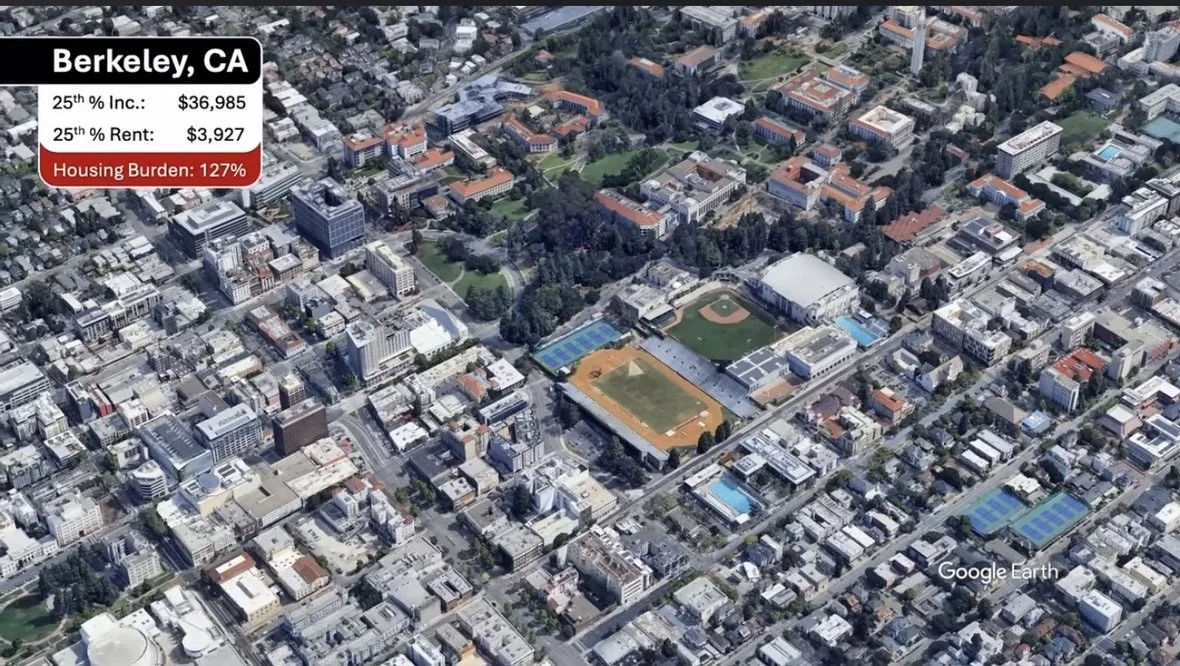
Too few homes make people compete for limited space and push rents higher. The loss of an occupied lower-cost apartment removes a home that someone can afford today. Southside experiences both pressures at once. The market does not measure human need. It measures ability to pay.
Berkeley's housing allocation for 2023 through 2031 calls for 8,934 homes. Most of that need is for very-low-, low-, and moderate-income households. The City's 2025 report shows that Berkeley has permitted 2,117 homes since the beginning of the current projection period, but only 594, or 28%, were in those three lower-income categories.
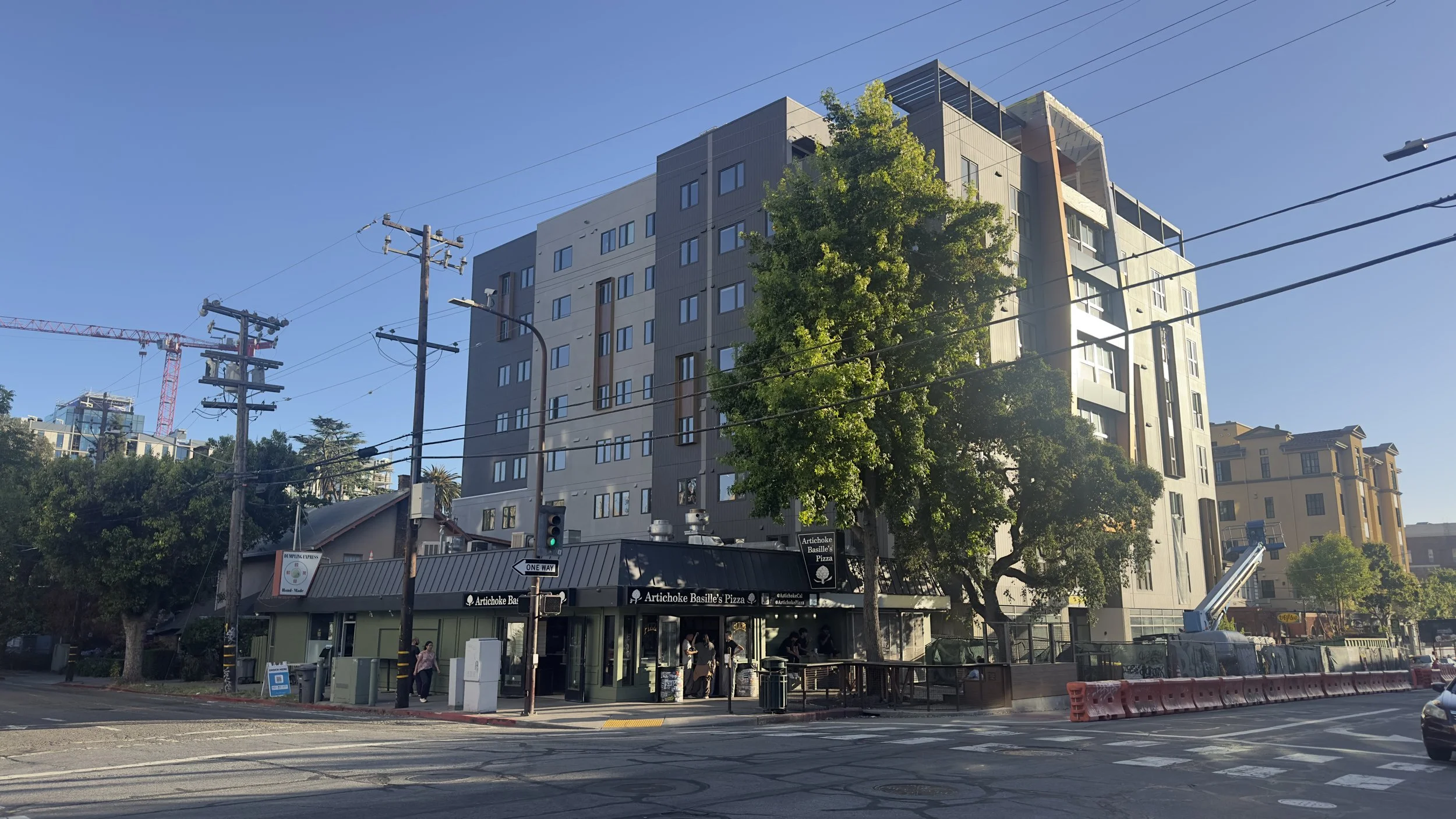
At 1921 Walnut Street, long-term tenants left a rent-controlled building that was demolished for UC Berkeley's Anchor House. The new project added student beds. It did not replace the affordability or protections those tenants lost.
Production and preservation are not opposing goals. Berkeley needs both. The public measure should be how many homes are completed and occupied, how many are affordable at each income level, who remains housed, and whether neighborhood infrastructure keeps pace.
Berkeley needs more homes, but the market cannot set the goal
I support adding homes throughout Berkeley, including in high-resource neighborhoods that have excluded lower-income residents through restrictive zoning and high prices. Under the present system, market-rate projects will be part of that production. I acknowledge that added supply can reduce competition for existing homes. I do not believe market-rate production should be the center of Berkeley's housing policy or that the market should decide who gets to remain.
Berkeley should implement its middle-housing rules fairly and support appropriate infill on surface parking lots, underused commercial sites, upper floors, transit corridors, and other already-developed land near services. Fire, evacuation, water, and street capacity require objective, site-specific review. They should not become blanket reasons to exclude housing.
The approved project at 2274 Shattuck will replace the closed UA Theatre with 227 homes, including 23 very-low-income homes, while preserving and renovating the Shattuck Avenue facade and lobby. I acknowledge that decision and the housing it will provide. It is not the outcome I preferred. I believe the UA should remain a working downtown theatre. Preserving a facade and lobby retains part of the building's history, but it does not preserve the civic use that brought people downtown.
Market-rate supply can ease rent pressure relative to building nothing, but those benefits are neither automatic nor equal across income groups. My priority is housing held outside speculative markets: public housing, social housing, limited-equity cooperatives, community land trusts, nonprofit ownership, permanent below-market-rate homes, and supportive housing. Those models allow public need, lasting affordability, and resident governance to set the terms.
Cities should implement state housing laws in good faith. Local control matters because residents live with the consequences of planning decisions, but it should not become a general excuse to block needed housing or preserve exclusionary patterns. When a state law creates a documented local harm, Berkeley should seek a narrow, evidence-based correction. When state policy creates an opening for public or social housing, Berkeley should be ready with sites, partners, financing, and an implementation plan.
Approval is only the beginning
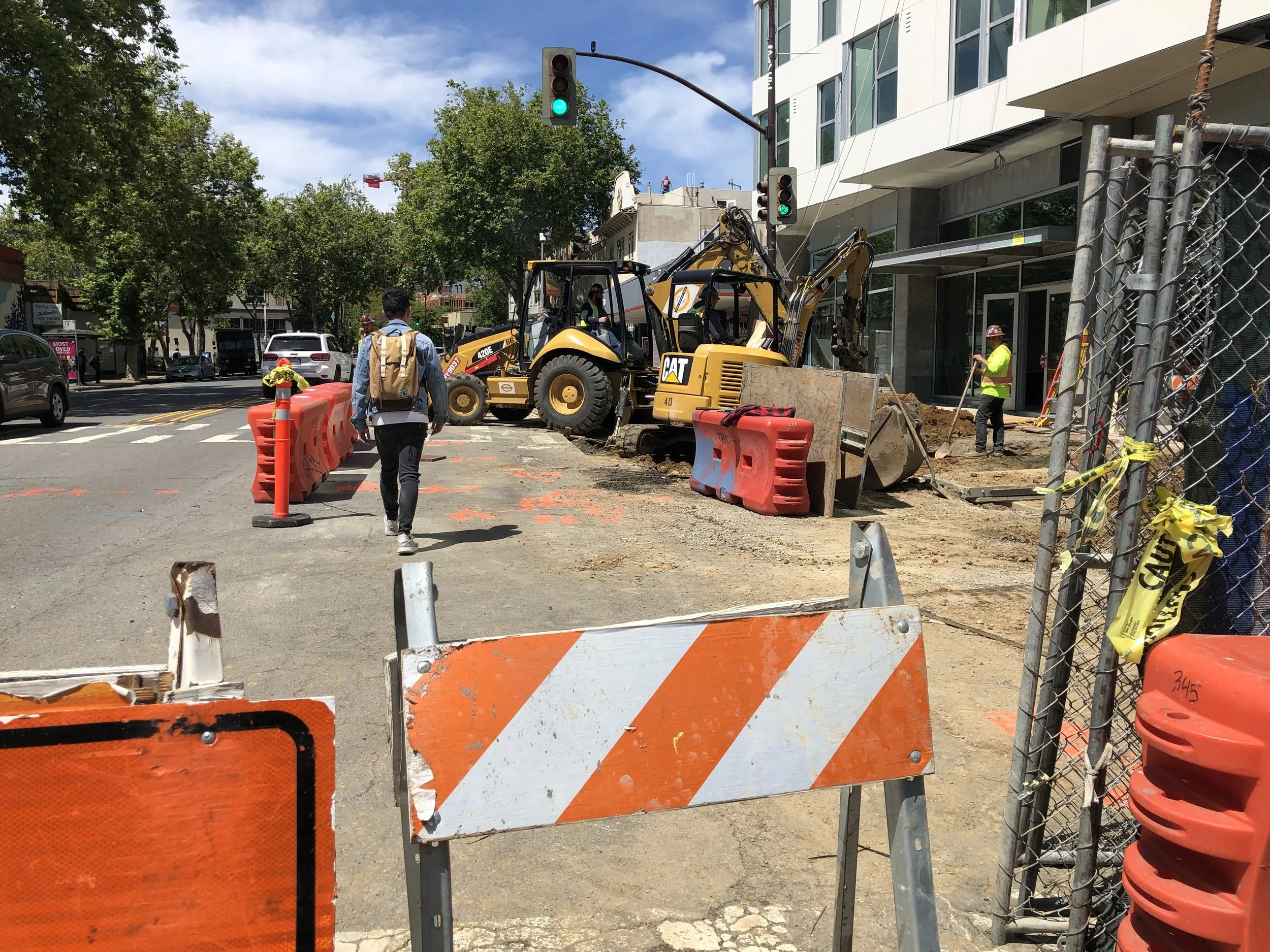
A housing approval does not guarantee financing, construction, utility connection, completion, or occupancy. Berkeley needs to identify the actual barrier at each stage and assign responsibility for solving it.
I will advance a housing-delivery package with coordinated preapplication review, objective standards, one written list of City deficiencies, and published review targets for code-compliant projects. Public, nonprofit, cooperative, and private projects all need a City process that identifies barriers rather than allowing them to drift between departments. A public dashboard should follow major projects from application through occupancy, showing the current stage, unresolved condition, responsible department or institution, and next deadline.
Within my first 100 days, I will convene a public housing-delivery working session with renters, homeowners, housing professionals, community land trusts, nonprofit developers, accessibility advocates, labor, and the responsible City departments. Its first product will be a published list of delivery bottlenecks, who controls each one, a correction timeline, and the measures residents can use to track progress.
Rules affecting housing should also be predictable and justified. I will evaluate point-of-sale mandates, transfer taxes, parcel taxes, and development requirements by their documented public purpose, total cost, who pays, available hardship protections, administrative burden, and measurable result. A policy should not shift costs without showing what public benefit it will deliver.
Intervene before displacement becomes homelessness
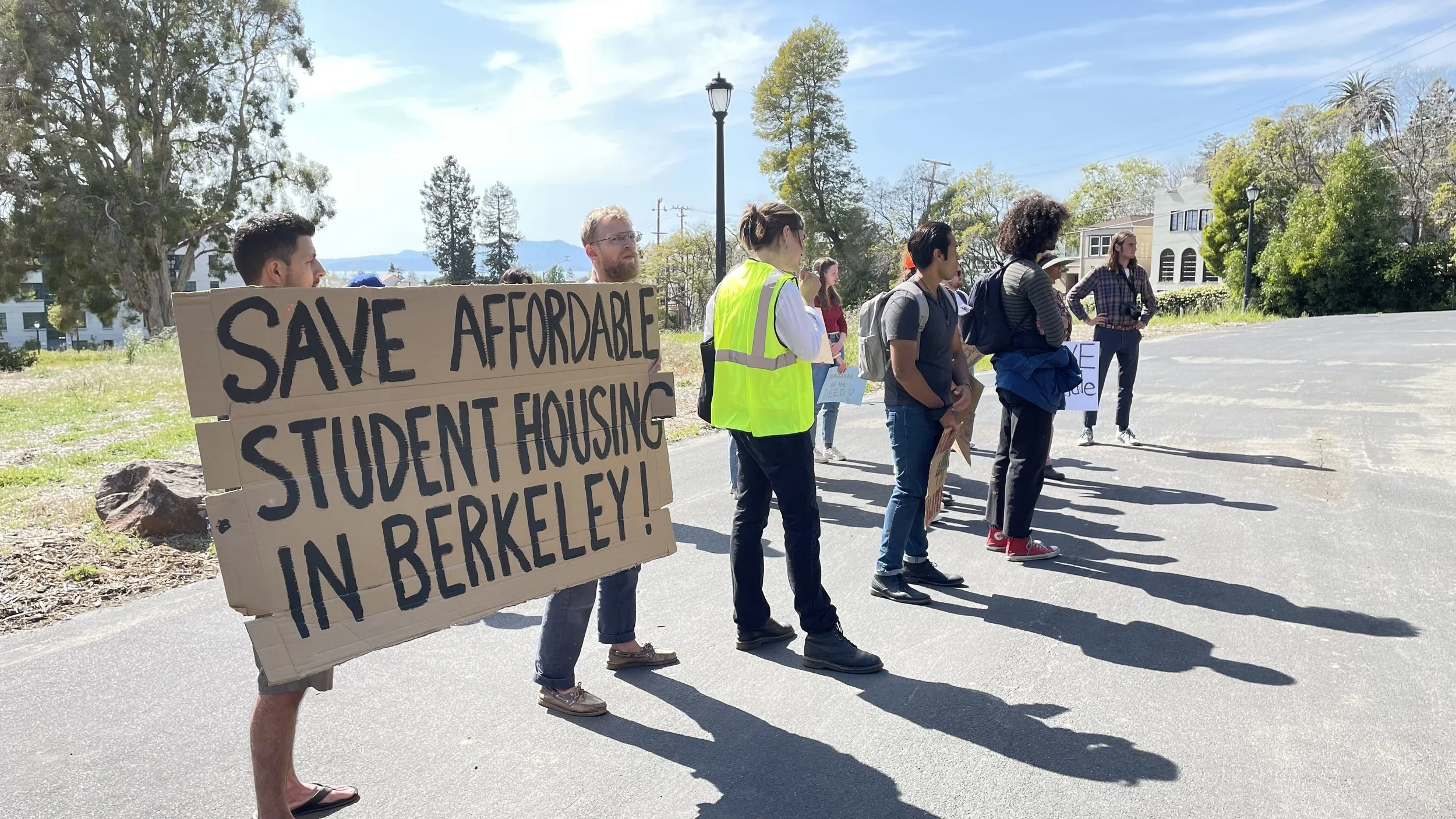
Berkeley landlords must file covered eviction notices and lawsuits with the Rent Board within three business days. That filing should become an early offer of help, with the tenant's consent and clear privacy protections.
When elected, I will introduce a Council referral asking the Housing Department to coordinate with the independently elected Rent Board and contracted legal-service providers. A renter facing displacement should receive a clear path to Rent Board counseling, legal-services referral, benefits screening, and Housing Retention assistance before the case becomes a housing emergency.
The public should be able to track households offered assistance, assistance accepted, evictions prevented, and housing retained after six and twelve months. Personal information must remain protected.
For people already living outside, Berkeley must provide safe shelter, storage, sanitation, accessible services, safe parking, and voluntary behavioral-health and substance-use care while permanent housing is developed. The City should expand permanent supportive housing on suitable developed sites, rehabilitate existing homes, use master leasing where it works, and coordinate case management with Alameda County.

Preserve and repair the homes people already afford
The lower-cost apartment that already exists is part of Berkeley's affordable housing supply, even when it does not carry a formal subsidy. Once that home is lost to demolition, speculative turnover, or institutional acquisition, replacing it can take years.
I will seek a dedicated Southside acquisition and preservation track within Berkeley's Small Sites Program. Community land trusts, nonprofit housing organizations, cooperative-housing partners, and resident-supported purchasers should be able to evaluate an occupied building before a sale closes.
In the first budget, I will protect Berkeley's current $3.8 million Small Sites process and seek a recurring local preservation contribution of at least $2 million per year, after confirming that funds are uncommitted and legally eligible. City funding should help qualified partners compete for County Measure A1, state, federal, bond, and tax-credit resources.
I will also propose a Healthy Homes preservation track connecting housing inspections, code enforcement, seismic work, lead and mold remediation, ventilation improvements, accessibility repairs, and energy upgrades. Where the funding source allows it, substantial public rehabilitation assistance should include temporary-relocation support, a right to return, limits on passing subsidized costs to tenants, and a defined affordability period.
Projects that remove occupied or rent-stabilized homes should publish what will be lost, what residents pay, what relocation and return rights apply, and what affordability will replace the homes. I will pursue one-for-one replacement of lost rent-stabilized homes at equal or deeper affordability wherever legally supportable.
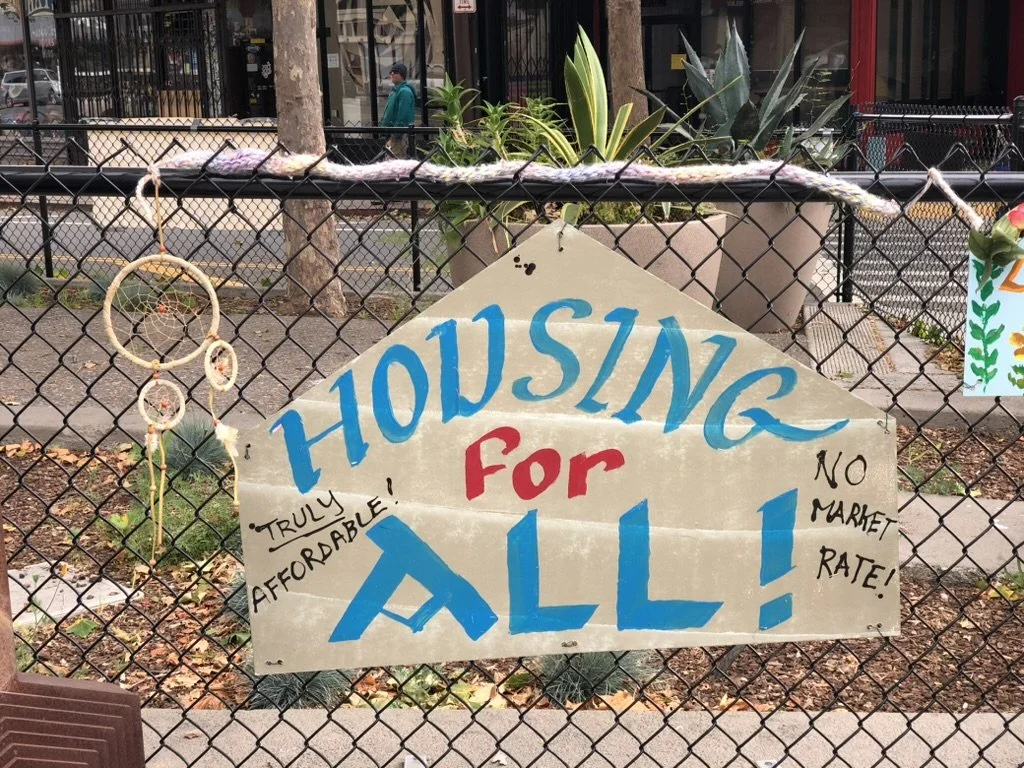
Build public and permanently affordable housing
Housing should be treated as public infrastructure. Berkeley's long-term direction should be homes that are publicly or community controlled and permanently protected from speculative sale.
I will create a social housing partnership for public agencies, limited-equity cooperatives, community land trusts, and mission-driven nonprofits. These homes should provide strong tenant protections, serve a mix of income levels among households unable to afford market rent, and give residents a meaningful role in management. The partnership should produce new homes and preserve occupied buildings before their affordability disappears.
I will begin a current public feasibility analysis of stronger on-site inclusionary requirements, deeper income targets, accessible and family-sized homes, and when an in-lieu payment produces less local value than affordable homes within a project.
Homeownership is one form of housing stability, but it cannot substitute for public and permanently affordable rental housing. I support targeted down-payment and closing-cost assistance for first-generation and first-time buyers. When public funds are used, clear resale or shared-equity rules should help one household build stability while preserving the public investment for future buyers.
The City should expand permanently affordable ownership through community land trusts and limited-equity cooperatives, enforce fair-housing rules in lending and sales, and measure who receives assistance, whether they remain in their homes, and how long affordability lasts.
Make UC Berkeley account for its housing decisions
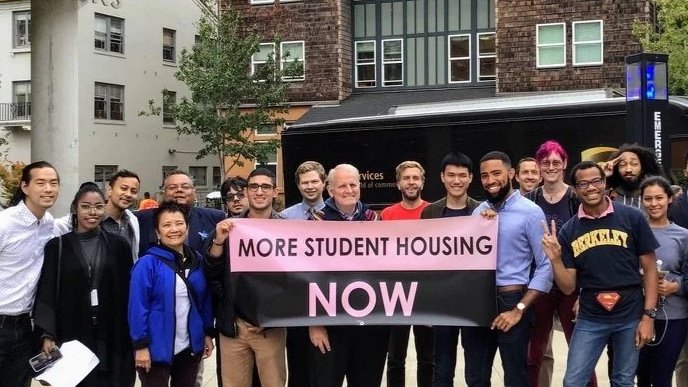
UC Berkeley's enrollment, housing prices, property acquisitions, and land choices affect the Southside rental market. The City cannot regulate the university in the same way it regulates a private project. It can demand evidence, participate in environmental review, negotiate agreements, use public records, and set clear public priorities.
I will request an annual City-UC housing impact report covering enrollment, campus beds, occupancy, full housing charges, mandatory fees, repair backlogs, off-campus demand, property acquisitions, occupied homes affected, and neighborhood commitments. UC should disclose the alternative sites considered for major projects and explain why each was accepted or rejected.
Student housing should be affordable, habitable, accessible, and available year-round to students who have nowhere safe to go during academic breaks. UC should publish the complete monthly price of each housing option, including mandatory meal plans and fees, and compare those costs with student income and financial aid.
UC Berkeley's enrollment, housing prices, property acquisitions, and land choices affect the Southside rental market. The City cannot regulate the university in the same way it regulates a private project. It can demand evidence, participate in environmental review, negotiate agreements, use public records, and set clear public priorities.
I will request an annual City-UC housing impact report covering enrollment, campus beds, occupancy, full housing charges, mandatory fees, repair backlogs, off-campus demand, property acquisitions, occupied homes affected, and neighborhood commitments. UC should disclose the alternative sites considered for major projects and explain why each was accepted or rejected.
Student housing should be affordable, habitable, accessible, and available year-round to students who have nowhere safe to go during academic breaks. UC should publish the complete monthly price of each housing option, including mandatory meal plans and fees, and compare those costs with student income and financial aid.
I will use the City-UC planning framework, settlement review, formal comments, Council resolutions, public hearings, and budget negotiations to seek written commitments. I support housing at suitable developed and underused sites. I will not vote to build housing on People's Park. In a dense neighborhood, irreplaceable public land and accessible civic space are part of the infrastructure that makes housing livable.
Growth must improve daily life
Every major housing action should identify the transit, accessible streets, sewer capacity, lighting, sanitation, trees, public bathrooms, emergency access, and civic space it requires. Each commitment should name the responsible agency, funding source, service standard, and completion date.
New residents should not arrive to broken sidewalks, inadequate sanitation, delayed infrastructure, or public systems that were never funded for the population they now serve. Existing residents should not be asked to absorb those costs without a public plan.
This is accountable growth: more homes, a larger public and permanently affordable housing sector, clearer review, reliable infrastructure, strong tenant protections, and public reporting from application through occupancy.
What success would look like
A renter receives an eviction notice and, with their consent, is connected to counseling and assistance before losing the home.
An occupied building comes up for sale and a community land trust or nonprofit has the financing and a clear City process to make an offer.
A family leaves temporarily for major repairs, returns to a safer home, and is not priced out because public money improved the building.
A code-compliant project moves through a predictable review, secures financing, completes construction, and opens homes that people occupy.
A first-generation buyer receives responsible assistance, builds household stability, and preserves the value of the public investment for the next buyer.
A student can see the true monthly cost of campus housing, find a habitable room they can afford, and remain housed during school breaks.
A denser Southside receives the sidewalks, sewers, transit, sanitation, trees, and public space its residents need.
That is the difference between approving development and governing for housing stability.
Help make housing stability the standard
Berkeley can add homes without surrendering housing policy to the market. We can build public and permanently affordable housing, intervene before displacement, preserve homes people already afford, expand responsible ownership access, and make institutions account for the costs of growth.
Read the full District 7 platform, share this plan with a neighbor, and join the campaign for housing people can afford and keep.
Aidan Hill
-
1. [City of Berkeley Housing Element and Regional Housing Needs Allocation](https://berkeleyca.gov/construction-development/land-use-development/general-plan-and-area-plans/housing-element-update)
2. [2025 Housing Element Annual Progress Report](https://berkeleyca.gov/sites/default/files/2026-06/HOUSING%20ELEMENT%20APR%202025.pdf)
3. [Berkeley middle-housing zoning](https://berkeleyca.gov/construction-development/land-use-development/middle-housing-zoning)
4. [California Housing Accountability Unit](https://www.hcd.ca.gov/hau/enforcement-authority)
5. [Berkeley Rent Board: Measure BB changes and eviction-notice filing requirements](https://rentboard.berkeleyca.gov/laws-regulations/measure-bb-changes-berkeleys-rent-ordinance)
6. [Housing Trust Fund and Small Sites Program](https://berkeleyca.gov/community-recreation/affordable-housing-berkeley/housing-trust-fund)
7. [Rental Housing Safety Program](https://berkeleyca.gov/doing-business/operating-berkeley/landlords/rental-housing-safety-program-rhsp)
8. [Tenant relocation for repairs](https://berkeleyca.gov/doing-business/operating-berkeley/landlords/tenant-relocation-repairs)
9. [Affordable housing requirements](https://berkeleyca.gov/construction-development/permits-design-parameters/design-parameters/affordable-housing)
10. [Below-market-rate homeownership information](https://berkeleyca.gov/community-recreation/affordable-housing-berkeley/below-market-rate-home-ownership-information)
11. [Berkeley Empty Homes Tax](https://rentboard.berkeleyca.gov/laws-regulations/city-berkeley-ordinances-affecting-rental-properties/empty-homes-tax)
12. [Alameda County Measure A1 rental programs](https://measurea1.acgov.org/rental-programs/)
13. [Walnut Street tenant displacement and Anchor House](https://www.berkeleyside.org/2021/09/22/walnut-street-rent-controlled-building-uc-berkeley-anchor-house)
14. [UC Berkeley planning documents](https://capitalstrategies.berkeley.edu/planning-documents)
15. [Southside Complete Streets project and funding](https://berkeleyca.gov/your-government/our-work/capital-projects/southside-complete-streets-project)
16. [California SB 555, the Stable Affordable Housing Act](https://leginfo.legislature.ca.gov/faces/billTextClient.xhtml?bill_id=202320240SB555)
17. [City Council approval record for 2274 Shattuck Avenue](https://berkeleyca.gov/city-council-special-meeting-eagenda-april-22-2025)
Funding note: Current appropriations and program balances can change. Proposed allocations on this page are Council budget goals, subject to legal eligibility, existing commitments, staff cost estimates, and public adoption.
Paid for by Aidan Hill for Berkeley City Council 2026, FPPC ID# 1481885.