

Protect Public Space
Public Space Everyone Can Use

What we had: a place where public life could happen
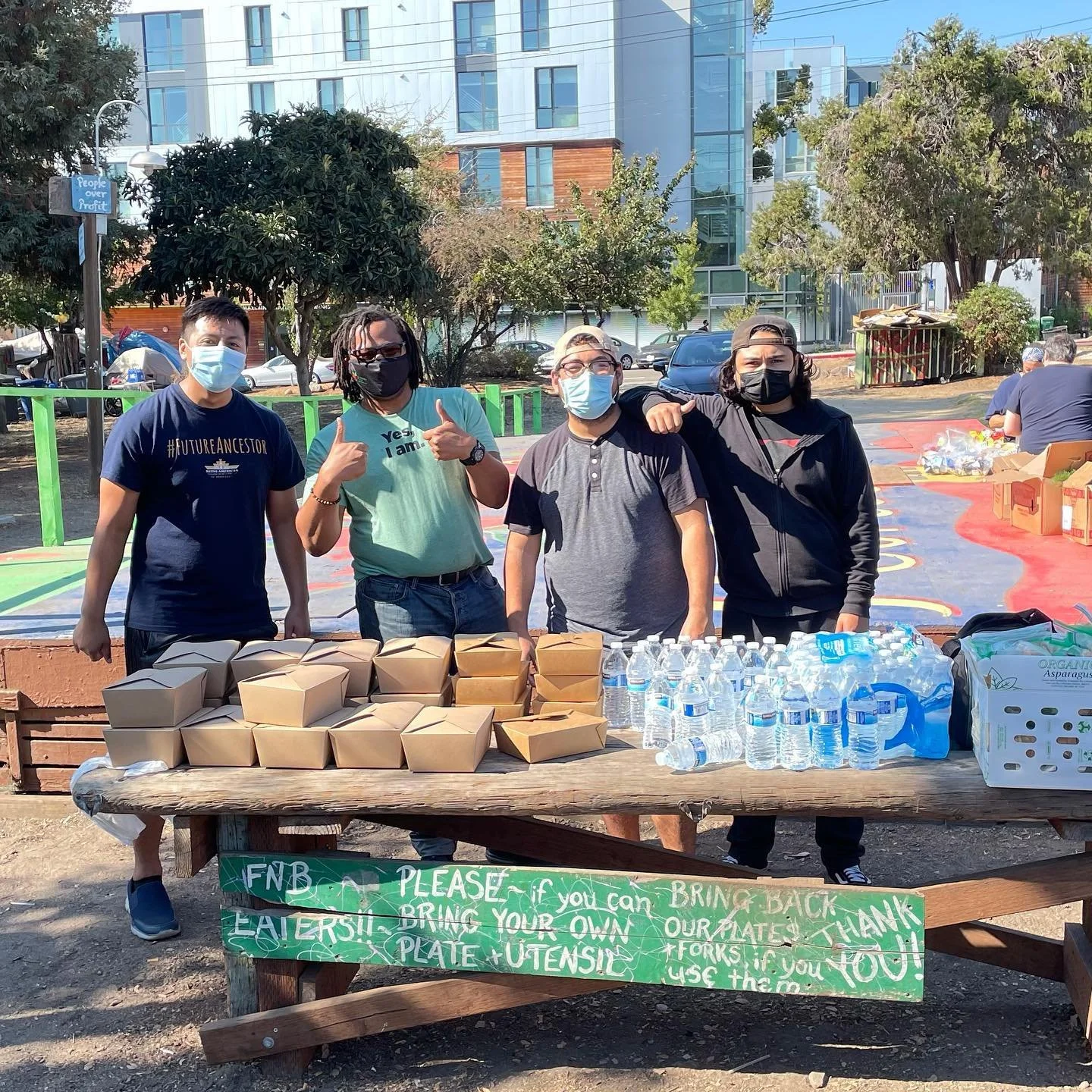
People's Park offered something that is increasingly difficult to find in a dense neighborhood: a place where a person could stay without being a customer. People shared meals, tended gardens, played music, rested, organized, and spent time with one another. Each activity depended on access to the same piece of land.
That public life included people with very different incomes and circumstances. A student leaving a crowded apartment, a worker between shifts, a parent with a child, an older neighbor, and a person living outside could all use the same shade or gathering area. The Park created contact across lines that private and commercial spaces often keep separate.
The Park also carried needs that no 2.8-acre site should have been expected to meet alone. Food access, sanitation, recreation, cultural life, emergency preparation, and rest are neighborhood-wide responsibilities.
Concentrating those needs in one contested place made the consequences of losing it much greater.
What we had was not only acreage. We had the ability to gather, share resources, and create community activity on land understood as public. Any honest plan for Southside must account for those functions and the public rights that allowed them to exist.
-
Berkeley has adopted plans, tax-funded parks and tree programs, street projects, public restrooms, emergency planning, and development standards. Each addresses a real need. They operate through different legal authorities, departments, funding sources, and schedules. Understanding the limits of the current approach requires examining both what these efforts accomplish and what remains unresolved.
A planning policy does not guarantee delivery
Berkeley's adopted Southside Plan, land-use policies on PDF page 60 and public-safety policies on PDF pages 168–170, calls for retaining People's Park as a public open-space commons, improving its restrooms and maintenance facilities, and strengthening its connections to surrounding streets and buildings. The plan also calls for coordinated City-UC disaster preparation and adequate maintenance of Southside public spaces and infrastructure.
The plan guides City decisions, budgeting, and development review. It also states that UC and other state agencies are not legally required to comply with it. In 2023, the City Council amended the Southside Plan and zoning rules to permit larger and denser development. That increased development capacity without settling how the neighborhood's public land, amenities, and operating capacity would expand.
A policy goal becomes a public benefit only when land, funding, authority, construction, operation, and maintenance are connected to delivery.
Acreage figures do not establish usable public access
Former Berkeley mayors Shirley Dean and Gus Newport estimated in a January 10, 2023 opinion that Southside neighborhoods needed 18 additional acres of accessible open space. An April 10, 2024 Parks Commission agenda report, Item 11, PDF page 10, separately calculated 52 additional acres of parkland needed citywide by 2040 using a two-acre-per-1,000-residents benchmark.
These figures cover different geographies and dates. Neither is a current adopted Southside acreage target, and neither shows whether a particular site has useful hours, an accessible entrance, shade, seating, drinking water, a restroom, community programming, or permission to remain without making a purchase.
UC's published People's Park landscape proposal says approximately 1.7 acres of the 2.8-acre site will remain open space and describes accessible walkways and space open to all. The acreage and landscape description do not, by themselves, establish the final hours, operating rules, maintenance duties, or range of community uses.
Public-space measurement should distinguish land area from the public rights and working amenities available on that land.
Individual capital projects do not create a complete network
Berkeley opened the 24-hour restroom at Telegraph and Channing in February 2025 after a citywide study ranked the location as the highest priority because of heavy pedestrian use and limited restroom access. A City memo reported a project budget of approximately $488,000 and $210,000 for maintenance in fiscal year 2025-2026. The operating contract called for cleaning and inspection three times each day. City opening and funding memo, February 10, 2025 | City maintenance-contract report, February 25, 2025, Item 11
That project delivered a needed service and demonstrates the operating work required to keep a facility usable. It does not provide the rest of Southside with a complete network of restrooms, water, shade, seating, indoor rooms, gardens, and emergency-support locations.
The completed Southside Complete Streets project and funding summary shows another form of useful delivery. Its approximately $16.5 million budget combined an $8.335 million federal-aid grant with City, Alameda County, and UC settlement funds to improve specific transportation corridors. Its scale and funding structure show that substantial neighborhood infrastructure requires defined projects, completed design work, multiple funding sources, and responsible departments.
A successful project should be credited for what it delivers without being treated as evidence that every related need has been met.
Citywide revenue is not an available Southside balance
Berkeley estimates approximately $22 million in Parks Tax revenue for fiscal year 2026. The City says this funding supports maintenance and staffing for 58 parks, right-of-way landscaping, and City-owned trees. Within that total, $2.75 million is set aside for capital projects, $500,000 for minor maintenance, and more than $600,000 for a Tree Planting Unit. City Parks Tax summary for Measures F and Y
City Measure FF street, safety, and environmental-funding summary says the measure is expected to generate approximately $15 million annually for 14 years. Sixty percent is assigned to streets and sidewalks, 30 percent to safety improvements, and 10 percent to environmental enhancements, fees, and other eligible uses.
These are substantial public resources with citywide purposes and existing obligations. A Southside proposal must identify the legally eligible source, existing commitments, the effect on other services, outside funds that still must be won, and the annual cost of operating and maintaining what is built.
Revenue estimates and fund categories create options; only a public appropriation creates an approved project budget.
Visible open space and dependable public rights are different measures
A campus lawn, private plaza, widened sidewalk, and City park can all appear open from the street. Their ownership, hours, rules, disability access, permitted activities, and closure procedures may differ. UC describes its proposed People's Park landscape as open to all, while retaining ownership and operational control of the site.
The same distinction applies indoors. Berkeley Public Library's current locations and hours directory includes Central Library and four neighborhood branches, with no branch in Southside. UC Berkeley Library's public-access guidance says most campus libraries are open to the public, but access, hours, borrowing, and available services vary by library. Campus library access is useful and still does not establish a Southside neighborhood-library program or a dependable community meeting room.
Where privately or institutionally controlled space is counted as a public benefit, the agreement should state the hours, accessible routes, permitted uses, maintenance duties, closure rules, enforcement process, and duration of public access.
A space should be counted according to the rights and services people can actually use, rather than appearance alone.
Emergency concepts are not the same as operating capacity
The Southside Plan calls for a coordinated City-UC disaster response plan, joint training, recurring coordination, and joint drills. The City's current Prepared, Safe, and Healthy Berkeley planning process is updating disaster and environmental-justice policy. Its draft community-workshop boards propose accessible community resilience hubs with backup power, clean air, and places to stay cool or warm.
Those hub concepts remain draft policy. A green space also cannot be assumed to be a safe assembly site. UC Berkeley's evacuation guidance says assembly areas should be a safe distance from buildings and may become unavailable during a large evacuation.
Operational readiness requires site and hazard assessments, accessible routes, alternate locations, water, sanitation, communications, supplies, staffing, agreements among responsible institutions, training, and exercises.
Emergency capacity should be reported through completed assessments, funded equipment, signed agreements, trained personnel, and tested plans.
Evaluating the Whole System
Public-space policy should be assessed through land, access rights, walking distance, amenities, funding, operations, maintenance, emergency capacity, and outcomes. Existing programs and projects have documented benefits, specific boundaries, and unresolved implementation questions. A clear public assessment should acknowledge what has been delivered while showing which neighborhoods and uses remain underserved.
-
A fair comparison should begin with the public record, acknowledge areas of agreement, and describe the limits of what that record proves.
People's Park is a documented difference
On November 6, 2025, Commissioner Micael joined a unanimous Housing Advisory Commission recommendation to extend funding reservations for several affordable-housing projects, including $14,359,593 for supportive housing at 2556 Haste Street in People's Park. The recommendation also requested a developer presentation and regular project updates. Housing Advisory Commission approved minutes, November 6, 2025, Item 6, PDF pages 1–2
I disagree with that direction. My platform opposes housing construction on People's Park and supports permanent supportive and affordable housing on appropriate alternative public or institutional sites.
Commissioner Micael's vote was a recommendation concerning an existing funding reservation for the supportive-housing component. It was not a City Council vote approving UC's undergraduate housing project, and it does not establish his position on every part of UC's larger development.
It does establish that, when the Housing Advisory Commission considered continuing a City housing-fund reservation for supportive housing at People's Park, Commissioner Micael voted yes. I would not have.
We share an interest in safer streets and gathering places
Commissioner Micael's published issues page, accessed September 15, 2026, proposes a car-free Telegraph Avenue, improvements to Dwight Triangle, and protection for walking and cycling during construction.
Those proposals address real parts of the public realm. I support safer walking and cycling, more useful gathering places, and street design that supports neighborhood life. I would not characterize Commissioner Micael's platform as indifferent to public space.
The difference is in the published scope and administrative structure. His page identifies particular street and plaza proposals. My platform also specifies a neighborhood inventory, land acquisition and protection, enforceable access agreements, operating budgets, a Bowditch pilot, emergency-readiness standards, and public measures for delivery and maintenance.
My platform defines when City action should begin
My public-space platform is organized around specific intervention points:
When the City evaluates neighborhood need, it should measure usable access, hours, amenities, disability access, and maintenance responsibility alongside acreage.
When a viable parcel, right of way, or shared facility becomes available, the City should have criteria and funding readiness to evaluate acquisition or permanent public access.
When capital money builds a facility, the approval should identify the operator, maintenance budget, repair responsibility, and public reporting before opening.
When a street is already scheduled for major work, public-space and accessibility options should be evaluated before the design is fixed. Bowditch's scheduled reconstruction creates such a decision point.
When UC or another institution makes a public-space commitment, the City should record the terms, responsible institution, delivery date, and result.
These mechanisms address what should trigger public action, who becomes responsible, what decision comes next, and what residents should eventually be able to measure.
The comparison has limits, and so does council authority
Commissioner Micael may have implementation ideas beyond what appears on his website. I can compare only the proposals and votes in the public record. The same standard applies to me: a proposal in this platform is not an adopted ordinance, appropriation, land agreement, or completed project.
A councilmember can submit referrals, propose budgets and legislation, request public reports, convene agencies and residents, and vote on matters before Council. Delivery may also require Council approval, City staff work, legal review, competitive funding, landowner participation, or an agreement with UC. UC owns People's Park and has legal authority the City does not control.
My commitment is to put the mechanisms into public process, distinguish City authority from UC authority, and report each proposal accurately from request through delivery.
The choice is how City government turns public-space goals into land, rights, budgets, responsible institutions, and results people can verify.
-
When elected, my first 100 days will focus on initiating the processes needed to carry out this public-space platform. These are requests I will advance; adoption, funding, land access, and implementation require further public decisions and coordination.
Request a public-space inventory and delivery schedule. Ask the City Manager to coordinate Parks, Planning, Public Works, Geographic Information Systems, emergency-management, and disability-access staff on an inventory of City, UC, school, and privately managed civic spaces. The report should identify ownership, usable acreage, public hours, access rules, restrooms, water, seating, shade, indoor rooms, accessible routes, maintenance responsibility, emergency potential, a responsible lead, cost, and publication schedule.
Begin the public-land opportunity and protection process. Request criteria for evaluating small parcels, excess right of way, underused public land, shared facilities, and permanent access agreements. Refer options for a $1 million acquisition-readiness reserve to the budget process, subject to eligible and uncommitted funds. Seek legal analysis of stronger safeguards for major conversions of City-owned public land, including the feasibility and scope of voter approval.
Request a Southside shade and amenities program. Ask Parks, Urban Forestry, Public Works, and disability-access staff to identify priority locations for trees, shade, seating, drinking water, restrooms, soil, and green infrastructure. Seek staff confirmation of eligible funding and operating costs before requesting an initial $500,000 Southside allocation, with establishment care, watering, cleaning, repair, and replacement shown separately.
Begin Bowditch Commons feasibility work. Request a Public Works briefing on the scheduled Bowditch reconstruction and rehabilitation in City Council Item 22, June 16, 2026, PDF page 2, including its current scope, design stage, budget, and decisions that remain open before anticipated completion in December 2027. Ask for a pedestrian-priority alternative that addresses disability access, emergency response, deliveries, move-in, sanitation, utilities, bicycle circulation, nearby streets, pilot operations, and preliminary cost.
Request an annual City-UC public-space and readiness report. Seek reporting on People's Park, other UC-controlled spaces, public hours, access agreements, amenities, maintenance, land-use commitments, and emergency coordination. The report should distinguish City actions, UC actions, joint agreements, unresolved requests, and the limits of City authority.
During the First Year
I will seek publication of the first public-space inventory, a public-land opportunity list, draft public-access and maintenance standards, a Southside tree and amenities priority map, Bowditch concept alternatives and a planning-level cost estimate, and a schedule for City-UC preparedness coordination. I will also seek an early and compensated consultation process with affected Indigenous communities for City-controlled public-space projects.
These are separate first-year goals, not promises that every facility, acquisition, agreement, or street project will be operational within 100 days.
What Residents Can Track
I will publish reporting on usable public-space acreage and access category; land gained, transferred, restricted, or lost; walking distance and public hours; trees planted and removed and their survival; restrooms, water, seating, shade, gardens, rooms, and accessible routes added or repaired; acquisition proposals; public-access agreements; capital and operating funds; maintenance and repair times; Bowditch decisions and costs; emergency assessments and exercises; UC commitments; and progress toward restoring community access to People's Park.
The public measure is whether Southside gains durable places where people can gather, rest, meet daily needs, and belong without paying for entry.
What we lost revealed what Southside still needs
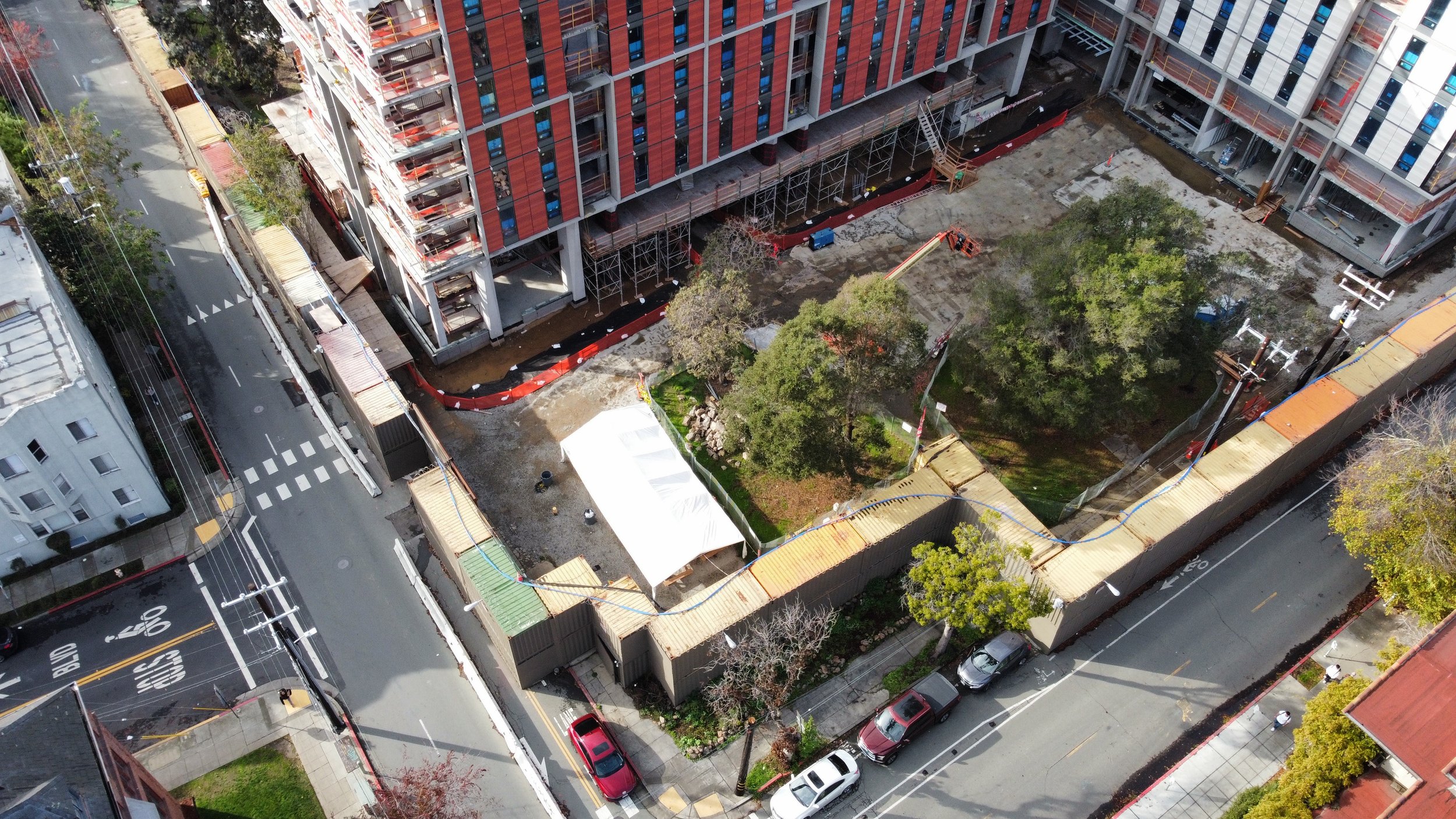
The closure of People's Park did not create every public-space problem in Southside. It exposed how few alternatives were ready to take on the work the Park had supported. A meal distribution cannot move to an imaginary plaza. A neighborhood meeting needs an accessible room. Rest requires a bench, shade, and enough time to remain there.
The same gaps appear in daily errands. A 2025 City Council agenda report identified Southside's lack of a full-service grocery store. Berkeley Public Library's current directory lists Central Library downtown and branches elsewhere in the city, but no Southside neighborhood branch. Most UC libraries are open to the public, yet their hours and services do not establish a neighborhood public-library program.
Berkeley opened a 24-hour public restroom at Telegraph and Channing in February 2025. The City identified that location as its highest priority because easily accessible restrooms were lacking despite heavy pedestrian use. This investment began to meet a documented need. It also shows why public space requires cleaning, supplies, repair, and a responsible operator after construction.
These are connected conditions. Housing growth changes how many people rely on streets, parks, libraries, restrooms, food stores, and community rooms. Southside needs a plan that measures access to the whole network and makes new public facilities part of neighborhood growth rather than an afterthought.
What we need: a network for everyday life
Every location should have a defined purpose and operating plan. A bench, community room, restroom, garden, and performance space meet different needs. The network works when those places support one another and when residents know what is available, when it is open, and who is responsible when it fails.
Southside needs free indoor and outdoor places distributed through the neighborhood. People should be able to meet a friend, read, rest, attend a meeting, use a restroom, or drink water without making a purchase. Access should be measured by walking distance, hours, disability access, facilities, and the ability to remain.
I will ask the Library and City staff to evaluate a Southside service point or shared community room, including partnerships, leases, staffing, operating hours, and existing mobile services. A practical assessment should determine what can be delivered and what it will cost before anyone promises a new branch.
Food and culture also need room. The Berkeley Student Food Collective provides an existing community grocery option on Bancroft. Additional grocery service depends on suitable space, rent, loading, storage, and an operator able to remain in business. The loss of several nearby cinemas has also reduced gathering places, even as BAMPFA continues film programming. Public-space programming can add free screenings, performances, community meals, and neighborhood events with clear responsibility for access, sanitation, and cost.
What we need: places prepared for hard days
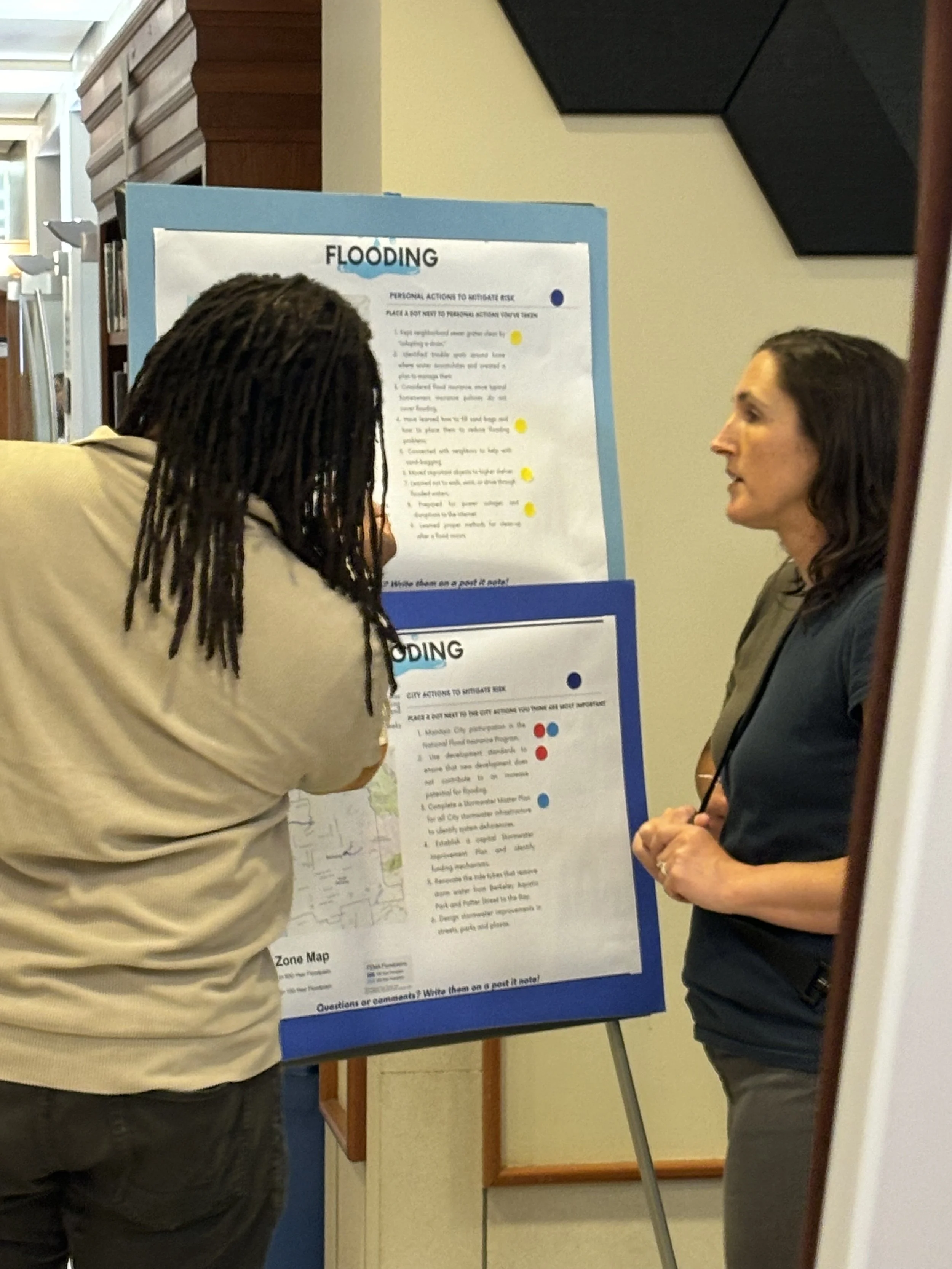
The Hayward Fault crosses the eastern part of the UC Berkeley campus, and Berkeley seismologists warn that a major earthquake can disrupt water, power, and transportation. When a building cannot be occupied and familiar services are interrupted, residents need to know where they can safely go and what help is actually available there.
Open land can support assembly, but green space on a map is not automatically a safe refuge. UC's evacuation guidance explains that assembly areas should be a safe distance from buildings and may themselves be unavailable during a large evacuation. Site hazards, access, capacity, alternate routes, and professional assessment matter.
The City's draft safety-policy materials propose accessible community resilience hubs with backup power, clean air, and protection from heat or cold. I support turning that direction into a costed Southside plan. The plan should distinguish immediate assembly areas, longer-term shelter, indoor clean-air or cooling space, supply distribution, and information points. Each function needs an appropriate site, operator, equipment, and public-access agreement.
Preparedness should grow out of places people already use. I will seek recurring neighborhood sessions, accessible public information, and coordination with existing preparedness groups. Residents should know the locations, practice the plan, and understand what each site can and cannot provide before an emergency occurs.
Secure the land and the public right to use it
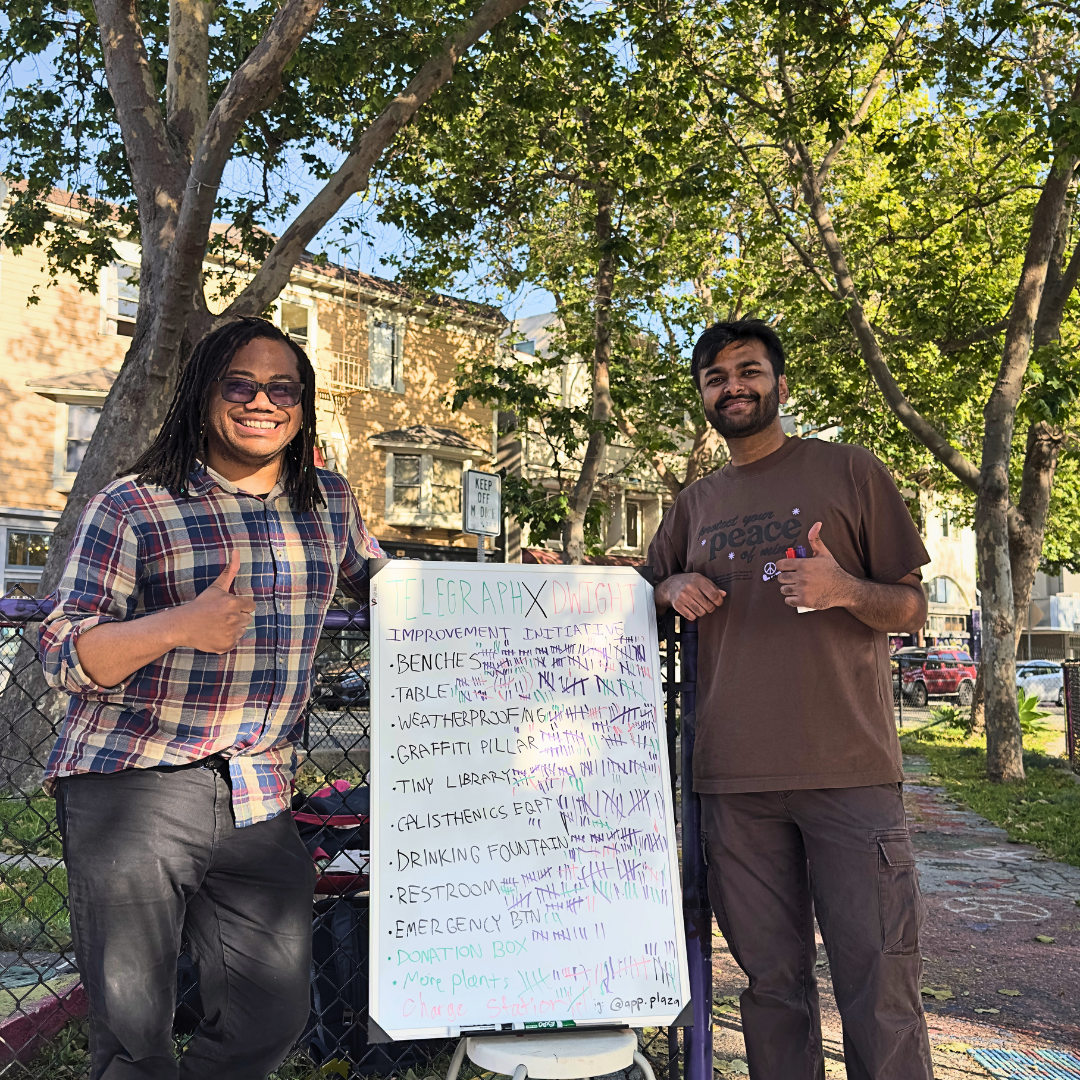
Every public function needs physical room. A library service point needs an accessible interior. A garden needs soil and water. A gathering place needs space to sit and move. Emergency assembly requires a site evaluated for hazards and capacity. Southside should identify these requirements before every suitable location is committed to another use.
I support a public-land acquisition reserve and a standing opportunity list covering small parcels, suitable City property, underused rights of way, and possible street conversions. Each proposal should identify the public purpose, purchase or conversion cost, environmental conditions, accessibility, and ongoing operations. The Santa Fe Trackbed park project demonstrates why land acquisition, soil remediation, and completion funding must be considered together.
Development can also create publicly accessible space where the City can lawfully require or negotiate it. I will seek standards for access hours, amenities, ownership changes, enforcement, and long-term maintenance, including the platform's proposed 50-year maintenance guarantee where legally supportable. Resident-only courtyards and private balconies should remain identified as private amenities because they cannot serve the same neighborhood function.
I will also pursue stronger voter-approval protections for major conversions of City-owned public land and early, compensated Indigenous consultation for relevant City-controlled projects. Legal review must define the mechanism and its limits. Decisions about scarce public land should tell residents what public use will be gained, what will be lost, and how any remaining need will be met.
Connect the network through Bowditch and greener streets
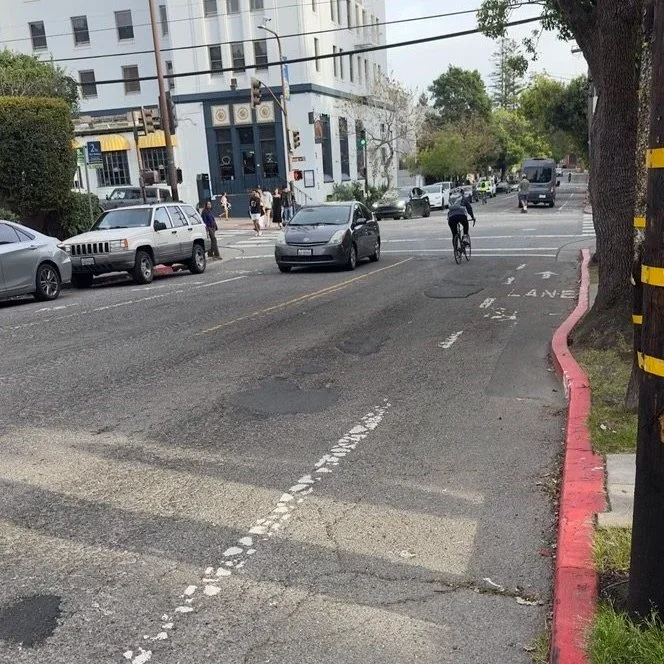
My Bowditch Commons proposal would examine a pedestrian-priority connection between campus and Southside with shade, seating, planting, and room for neighborhood activity. It is one way to turn street space into a link between housing, public places, transit, food, and services.
The design must preserve disability access, emergency response, apartment access, deliveries, sanitation, utilities, and bicycle movement. I support a public pilot that measures these conditions and the effects on nearby streets before a permanent arrangement is selected. Any emergency-support role would require a separate hazard and operations assessment.
Along Bowditch and other priority routes, trees and planted areas need adequate soil, watering, drainage, and accessible clearances. Rest areas and drinking water should be planned as parts of a connected route. The budget should include establishment care and repairs, with tree survival and amenity availability reported over time.
I will ask the City to coordinate these choices with scheduled street work and publish the design decisions that remain open. A person should be able to move safely through Southside and also find places to stop, gather, and participate in neighborhood life.
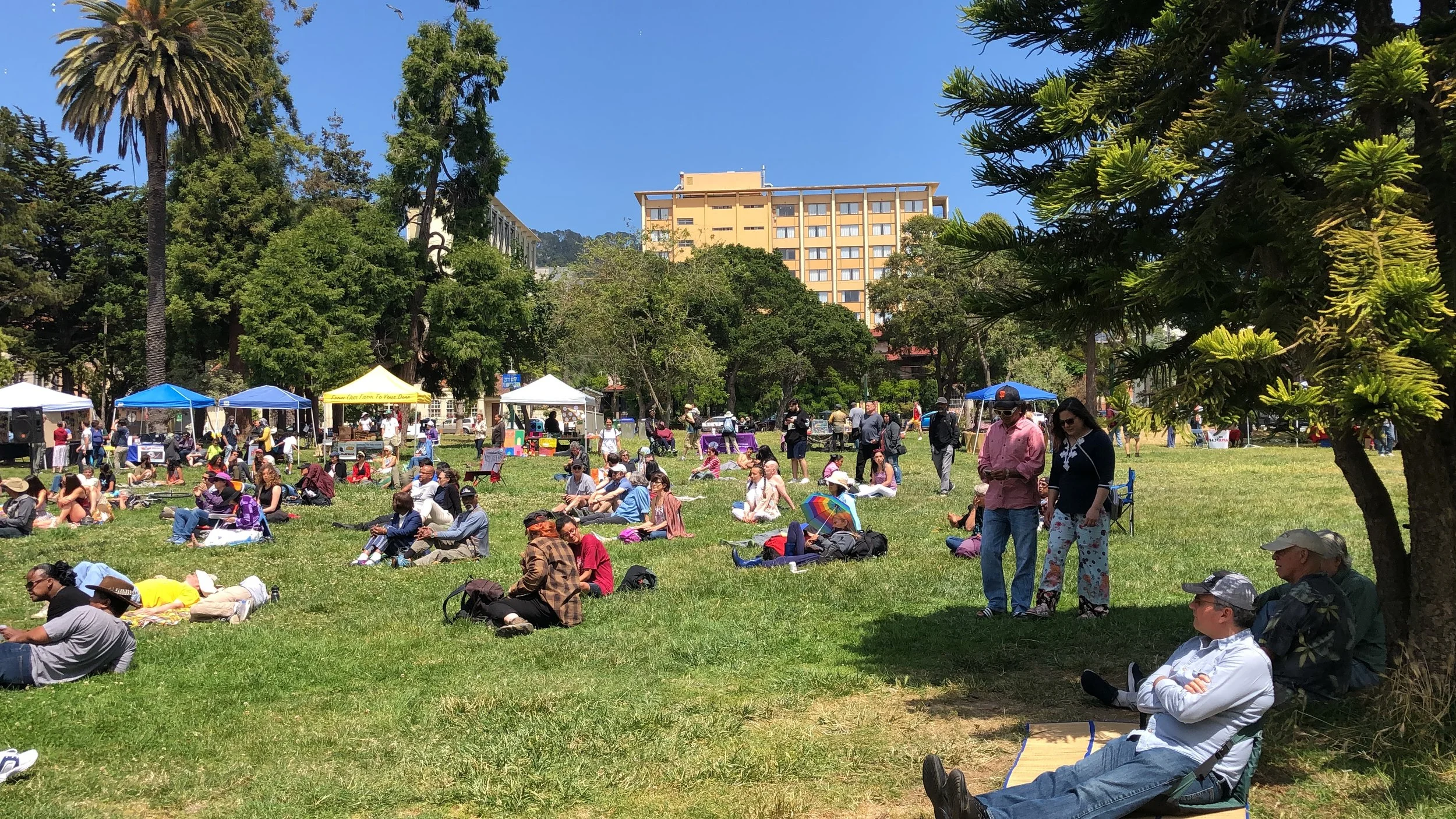
Restore People's Park and require UC accountability
People's Park remains central to what Southside can regain. My position is that it should be restored as public land, ecological space, and a place for community life. Permanent supportive and affordable housing should be built on appropriate alternative public or institutional sites outside the Park.
UC owns the land and has authority the City does not control. A councilmember cannot unilaterally order restoration. I will continue using City hearings, formal comments, public records, environmental review, the City-UC planning process, and lawful negotiations to pursue restoration and community access. I will make clear what the City requested, how UC responded, and which options remain available.
UC is also central to Southside's housing, daily population, and public facilities. I will seek clear agreements concerning public use of appropriate UC-controlled spaces, including hours, capacity, accessible routes, amenities, maintenance, and what happens during campus closures or major disruptions. A proposal will be reported as a proposal until an enforceable agreement exists.
Restoring People's Park should be part of a larger expansion. One park should not again be expected to carry the neighborhood's need for food sharing, gardens, culture, sanitation, recreation, emergency preparation, and rest. The goal is a restored Park connected to a stronger system around it.
Fund the places and the care they require
Land without operating money can become inaccessible or neglected. I will seek budgets that separate acquisition, design, construction, staffing, supplies, maintenance, and replacement. Residents should see the full cost before approval and the responsible department after opening.
The Parks Tax supports Berkeley's parks, landscaping, City trees, and park workers. The City's fiscal-year 2026 revenue estimate of approximately $22 million is committed program revenue, not an available balance for a new Southside promise. Any proposed use must account for legal eligibility, existing obligations, and the effect on services elsewhere in Berkeley.
Public reporting should follow every project through that sequence. I will distinguish what I requested, what Council approved, what was funded, what opened, and what continues to work. Spending is an input. The public result is a place people can actually use.
I will seek a phased program: document access and readiness gaps, cost the most useful improvements, secure appropriate sites and agreements, and fund opening and continued care. Grants and potential UC contributions should remain listed as money being sought until awards or signed agreements are confirmed.
What we can regain
We can regain a Southside where a shared meal has a home, a garden has land, and a neighbor can sit beneath a tree without being asked to buy something. We can regain rooms for meetings and culture, reliable restrooms and drinking water, and routes that are accessible from one public place to the next.
We can regain the relationships that form when people know where to find one another. Those relationships matter on an ordinary afternoon and during a disaster. A familiar place with a tested plan can help people share information, check on neighbors, and reach the support that remains available.
We can also regain public confidence that growth will improve the neighborhood around it. I will report usable public space gained or lost, public hours, functioning amenities, accessible connections, tree survival, operating costs, and unresolved repairs. Emergency readiness will be measured through completed assessments, signed agreements, equipment, training, and exercises rather than acreage alone.
People's Park taught me that public space is defined by what people can do there together. That is the standard I want Berkeley to use as Southside grows: restore the land and community life we lost, build the places we still need, and maintain them well enough that people can rely on them.
A public future for Southside

Southside can regain the places that let people rest, gather, share food, create culture, and care for one another. When elected, I will work to restore People's Park, build the wider network our neighborhood needs, and protect those places through lasting public access, responsible maintenance, and clear accountability.
We know what we had. We know what we need. Together, we can regain it.
Aidan Hill
-
Links checked September 15, 2026. Page and item references identify where the cited information appears in longer City documents.
Dean and Newport, “Breaking the impasse on People's Park,” January 10, 2023: full republication (original Berkeleyside URL)
Parks Commission agenda, April 10, 2024, Item 11, PDF page 10: citywide 52-acre projection
Berkeley Seismology: preparedness and infrastructure disruption
City draft community-workshop boards: proposed resilience-hub concepts
Chronicle: downtown cinema closures and UA decision, April 2025
City public-restroom capital project: Telegraph-Channing opening and project background
City memo, February 10, 2025: Telegraph-Channing restroom construction and operating funds
City Council Item 11, February 25, 2025: Telegraph-Channing restroom maintenance contract
City Measure FF street, safety, and environmental-funding summary